What Green Roofs Taught Me — and What AI Is Teaching Us Now

Green Building, Green Buildings and Climate Resilience

By Anasa Laude, LEED AP BD+C 

Years ago, I was part of a student-faculty team called Greenproofing, funded by NOAA and co-founded with interdisciplinary team of faculty including Kevin Foster, now deputy dean at the Colin Powell Center. We worked alongside Gioya DeSouza-Fennelly, a science teacher at Teachers College, who advised the project and helped bridge the work between college and high school students. Our mission was straightforward: install and maintain green roofs on schools and affordable housing sites across the city. We installed and maintained a roof at Lantern Group, a housing provider serving formerly homeless residents and youth aging out of foster care, with DYCD and CCNY students doing the hands-on work. The work was community-driven and grounded in real places. We were thinking about heat, air quality, and stormwater. We were not thinking about AI.

I’m returning to that work now with different eyes. Not to romanticize it, but to ask what it would look like if students today could engage with green roof design at the concept level, using the tools available to them now, including AI. What follows is a framework for a multi-day unit that teachers can adapt for environmental engineering, soil science, botany, math, or physics. It works as a standalone unit or as an interdisciplinary thread across classes.

What Green Roofs Actually Do

Before getting to the AI piece, it helps to understand what a green roof is doing and why it’s worth teaching. A green roof is a layered system: a waterproof membrane, a drainage layer, a growing medium, and vegetation. Together, those layers reduce stormwater runoff, lower surface temperatures through evapotranspiration, filter air, and add insulation to the building below. In dense urban areas, they’re one of the most effective interventions for managing heat at the neighborhood scale.

What makes green roofs interesting for classroom use is that they sit at the intersection of multiple disciplines. The growing medium is a soil science question. The plant selection is a botany question. The thermal performance is a physics question. The load calculations are a math and structural question. That’s before you get to the planning, community context, and systems thinking.

Where AI Enters the Picture

AI tools are changing what’s possible in green roof planning, and they’re doing it in ways that translate well into classroom learning.

At the planning stage, AI-assisted mapping tools can analyze satellite imagery to identify rooftops that are structurally viable, appropriately oriented, and large enough to be worth treating. In a classroom context, students can explore publicly available building and zoning data and think through what criteria they would use to rank candidate sites. That’s a real planning problem, and it teaches spatial reasoning, data interpretation, and prioritization.

At the design stage, AI tools can help model thermal performance, water retention, and plant coverage across different configurations. Students can use simplified modeling prompts to ask: what happens to runoff if we increase the depth of the growing medium? What happens to the heat island effect if we plant sedums versus grasses? These aren’t hypothetical questions. They’re the same questions practitioners are working through.

At the management stage, AI supports real-time monitoring of soil moisture, temperature, and plant health through sensor networks. This is where the data science connection lives: interpreting sensor data, identifying anomalies, and making decisions based on what the data shows.

Green Roofs and Solar: A Natural Pairing

One concept worth introducing explicitly is the relationship between green roofs and solar panels. On a conventional roof, solar panels heat up in direct sun and lose efficiency as temperature rises. A green roof moderates that surface temperature, which can improve solar panel performance. Some building systems integrate both, with panels elevated above the growing medium so both systems coexist.

For students, this is a useful design constraint to work with. How do you allocate roof space between vegetation and panels? What’s the tradeoff between maximizing solar generation and maximizing stormwater management? These are authentic engineering design challenges that don’t require a construction budget to think through seriously.

Bringing It Into Specific Classrooms

The unit works differently depending on the subject, but the connective tissue is the same: students are designing or evaluating a system, making decisions based on evidence, and accounting for tradeoffs.

In a soil science class, the focus is on the growing medium itself. Green roof substrates are engineered: they need to be lightweight, well-draining, and capable of supporting plant life with minimal organic matter. Students can compare engineered substrates to natural soils, examine drainage rates, and think through how substrate depth affects both plant selection and building load.

In a botany class, plant selection becomes the central problem. Green roofs in temperate climates often rely on sedum and other succulents because they’re drought-tolerant and shallow-rooted. But plant selection is also a function of climate, sun exposure, and maintenance capacity. Students can research plant communities, design planting plans, and discuss how biodiversity on a rooftop compares to a ground-level garden.

In a math class, the numbers are everywhere. Load calculations require understanding weight per square foot and structural capacity. Stormwater modeling involves volume, surface area, and absorption rates. Solar energy estimates involve angle, surface area, and efficiency percentages. These are applied problems that connect directly to what students are learning in algebra and geometry.

In a physics class, the focus can shift to thermal dynamics. How does evapotranspiration work and why does it cool surfaces? What is the difference between reflectance and thermal mass? How do green roofs compare to cool roofs and white roofs in terms of heat management? These questions ground thermodynamics in a real urban application.

A Note on AI’s Own Footprint

I’d be leaving something out if I didn’t name this: AI tools use energy, and large models use a lot of it. As Ray Garcia has reminded me, a tool is only as good as how we use it and the values we bring to the work. Part of teaching AI in this context is teaching students to ask that question themselves. If we’re using AI to design systems that reduce urban heat, what’s the energy cost of the AI itself? Is it running on renewable energy? Are we using it efficiently? These aren’t rhetorical questions. They’re design criteria.

That critical framing belongs in the unit, not as a caveat but as part of the inquiry.

So What Is AI Teaching Us Now?

That’s the question underneath all of this. And working through it in the context of green roofs has sharpened my thinking in ways I didn’t expect.

AI is teaching us how complex these systems really are. When you ask an AI to model a green roof, you have to specify everything: substrate depth, plant type, climate zone, roof orientation, building load. That specificity is the lesson. Students who try to prompt their way through a design problem quickly discover how many variables they were glossing over. The friction is productive. It reveals what they don’t yet know.

AI is teaching us where human judgment lives. The mapping, the modeling, the monitoring — AI can support all of it. What it can’t do is decide who the roof is for, or whether the community had a say in the design, or what it means for formerly homeless residents to have a garden above their heads. The limits of the tool point directly to what humans must bring to the work.

AI is teaching us that optimization is not the same as design. A model can maximize stormwater retention or solar output. It cannot account for a community’s relationship to a place. That gap isn’t a flaw to be fixed. It’s a design criterion — and teaching students to name it is one of the most important things we can do.

And AI is teaching us to ask better questions. In the classroom, the prompt is the lesson. Students who learn to interrogate an AI output — to ask why it recommended one substrate over another, or whether the energy cost of the model outweighs its benefit — are developing the same critical thinking they need to evaluate any data source, any system, any claim.

That’s what Greenproofing was always about, before any of us knew what a large language model was. You put students in proximity to a real problem, with real constraints, serving real people. The thinking follows. AI is just the newest set of constraints worth thinking through.

Questions Worth Sitting With

I want to name something before closing. Green infrastructure is not neutral. Green roofs are expensive. In New York City they’re far more common on luxury buildings than on affordable housing, even though the communities that need heat relief and flood mitigation most are often the ones least likely to have them. Green gentrification is real — the greening of a neighborhood can accelerate displacement. Permitting and building codes in many cities make even modest green infrastructure costly and slow. The average person anywhere in the world cannot afford an architect to help them design one.

AI carries its own version of this tension. It is largely controlled by a small number of companies with enormous power and unclear accountability. Its energy footprint is not trivial. And its benefits are not evenly distributed.

I still think both green infrastructure and AI can help us solve hard problems. I think that’s worth teaching. But I also think the most important thing we can teach students is how to hold the promise and the problem at the same time — and to ask who benefits, who decides, and who pays.

These aren’t questions with right answers. They’re questions worth exploring:

  • Green roofs reduce heat and flooding. But who gets them, and who doesn’t? What does that tell us about how cities make decisions?
  • If green infrastructure increases property values, what happens to the people who already live there?
  • AI can help design and monitor green systems. But who controls those tools, and who has access to them?
  • The average person can’t afford an architect or an AI consultant. Does that change what these tools are actually for?
  • If we use AI to build more sustainable cities, but AI itself consumes significant energy, how do we weigh that tradeoff?
  • What would it look like for a community to own and govern its own green infrastructure — and its own data?

That’s the full piece. The lesson breakdown chart from earlier pairs with it as a standalone resource teachers can download or reference separately. Want me to create a clean document version you can save and edit?

Teachable Green Cities: What Students Can Learn from Cities That Chose to Work with Nature

Green Buildings and Climate Resilience, Local Economies

When many students think about environmental sustainability, they picture recycling bins, solar panels, or campaigns to reduce litter. These efforts matter. But they only tell part of the story. One of the most powerful things we can teach young people is that sustainability is fundamentally about how we design systems — and that cities are some of the most instructive systems we have.

Cities concentrate people, resources, problems, and possibilities in ways that make the stakes visible. They also make the design choices visible. When a city floods repeatedly, or bakes in summer heat, or loses its green space to pavement, those are not accidents. They are the result of decisions — decisions that can be studied, questioned, and reimagined.

This piece explores how educators can use real cities as case studies for teaching: 

Environmental literacy

Systems thinking, and

Design.

As the world evolves at a rapid pace — upending economies, industries, and communities — grounding students in these three areas may be one of the most important investments we can make in their professional, civic, and personal futures.


Why Cities?

Cities are where most of the world’s population now lives. They are also where the effects of climate change are felt most intensely — through urban heat islands, flooding, air quality crises, and unequal access to green space. At the same time, cities are where some of the most ambitious environmental design work is happening.

For students at any level, cities offer something textbooks often cannot: a real system to examine. Every neighborhood has a history of decisions. Every park, drainage canal, vacant lot, and rooftop represents a choice someone made — or a choice no one made. Learning to read a city as a designed system is a skill that transfers across disciplines and careers.


Five Cities Worth Studying

These cities are not perfect models. Each has made mistakes, faced tradeoffs, and is still learning. That is part of what makes them useful for teaching.

Singapore: Designing Nature into the City

Singapore is a small island nation with limited land, limited natural resources, and a dense and growing population. Despite these constraints, it has become internationally recognized for integrating ecological systems into urban infrastructure rather than treating them as competing interests.

Singapore’s “City in Nature” vision, launched in 2021, aims to create a green, liveable, and sustainable home for all citizens by 2030 — conserving and restoring nature, expanding community parks, and strengthening the connections between green spaces.   The country’s four nature reserves serve as primary providers of ecosystem services, helping to clean air and water and support native flora and fauna. Nature parks were formed around these reserves specifically to buffer them from urbanization.  Nearly half of Singapore is now green space, supported by  370 kilometers of park connectors  that link parks and neighborhoods across the island.

These functions are sometimes described as ecosystem services — the measurable contributions that healthy natural systems make to human well-being. Singapore has invested in quantifying and protecting these services rather than assuming they will persist on their own. Singapore even developed its own City Biodiversity Index, a framework for evaluating urban biodiversity and ecosystem services that has since been implemented in cities globally. 

For students, Singapore raises a foundational question: what would it look like to plan a city the way an ecologist thinks?

Medellín, Colombia: Equity and Green Infrastructure Together

Medellín was once one of the most violent cities in the world. Over the past two decades, it has become a global reference point for urban transformation — not only in terms of public safety but in terms of how infrastructure can address both environmental and social inequality at the same time.

 In 2016, Medellín launched a green corridor project aimed at creating an interconnected 20-kilometer network of shade by transforming 18 roads and 12 waterways into green spaces.  The results were measurable. Temperatures fell by 2°C in the first three years of the program , and officials expect a further decrease of 4–5° over the coming decades. Air quality also improved significantly: levels of particulate pollutants dropped, and in just one corridor, new vegetation was estimated to absorb over 160,000 kilograms of carbon dioxide per year. 

 The corridors were co-managed by community-based organizations, ensuring responsiveness to safety, cultural use, and public access. Green jobs were created for local residents trained in planting, maintenance, and environmental monitoring. Universities conducted air and temperature monitoring and fed that data into planning. 

Medellín asks students an important question that Singapore does not always raise: who benefits from green infrastructure, and who is left out?

Curitiba, Brazil: Planning as Prevention

Curitiba is often cited as one of the most sustainably planned cities in the world, and its story is particularly instructive because its innovations were born of constraint rather than abundance.

 Beginning in the 1960s under Mayor Jaime Lerner, Curitiba implemented strict land use controls, pedestrian-focused development, and an efficient bus rapid transit system that eventually came to serve 85% of residents.  Rather than building expensive concrete drainage infrastructure to manage flooding,  the city converted floodplains into parks and surrounded urban areas with grass fields, saving both cost and environmental impact.  The cost of this approach has been estimated at 5% lower than building conventional concrete canals.

 Today, Curitiba has 52 square meters of green space per person — one of the highest densities of urban green space in the world — and is known as the environmental capital of Brazil. 

What Curitiba teaches is the value of upstream thinking: intervening early, designing for prevention rather than response, and treating ecological constraints as planning parameters rather than obstacles.

Houston, Texas: Learning from Failure

Houston is a different kind of case study — and a necessary one. When Hurricane Harvey hit in 2017, it dropped more rainfall on the Houston metropolitan area than any storm in US history. The flooding was catastrophic. More than 100,000 homes in the Houston area were damaged or destroyed by Harvey’s floodwaters.

The disaster was not simply a function of an unprecedented storm. Houston, the largest US city with no zoning laws, is a case study in limiting government regulation and favoring growth — often at the expense of the environment. Wetland loss is one of many effects of this approach; while vanished wetlands would not have prevented flooding entirely, experts say they would have made it significantly less severe. 

The communities hit hardest were not random. Research shows that 30 to 50% of flooded properties would not have flooded without climate change, and that climate change-attributed impacts were particularly concentrated in low-income Latina/o neighborhoods, including many located outside of FEMA’s officially designated floodplains. 

Houston has since invested in green stormwater infrastructure and bayou restoration.  Local advocates now emphasize protecting coastal prairie wetlands as one of the region’s best defenses against flooding — a form of natural infrastructure that was largely paved over during decades of unregulated development.

Houston is valuable precisely because it is complicated. It shows students what happens when development outpaces planning, and it raises hard questions about accountability, equity, and what resilience actually requires.

New York City: Scale, Equity, and the Limits of Good Intentions

New York City has some of the most ambitious sustainability commitments of any city in the United States. Its green infrastructure programs, urban tree canopy initiatives, coastal resilience planning, and building decarbonization laws are among the most comprehensive in the country.

And yet the benefits are distributed unevenly.  Majority Black and Brown neighborhoods in NYC have 33% less tree canopy on average than majority white communities. Low and moderate-income neighborhoods have 25% less canopy than higher-income areas. Neighborhoods with the highest poverty rates have 41% less tree coverage than the wealthiest neighborhoods.

 Neighborhoods with less canopy — particularly in parts of the South Bronx and Central Brooklyn — experience higher surface temperatures, greater exposure to extreme heat, and elevated rates of heat-related illness.

Reaching citywide canopy goals without centering equity is possible — but experts note it would be “much simpler and probably a lot cheaper” to do it that way. True equity requires working with community members to understand their specific visions, and raises the additional concern of green gentrification, where new green spaces increase the cost of living and price lower-income residents out of their neighborhoods. 

For students, New York offers a lesson about the gap between policy intention and lived reality. It raises questions about how environmental benefits are allocated, how community voice shapes planning decisions, and what it means to pursue sustainability in a city defined by deep inequality.


Three Frameworks for Teaching with These Cities

Ecosystem Services and Natural Capital

Each of these cities, in different ways, is grappling with the same underlying question: what does nature do for us, and what happens when we lose it?

Students can investigate this question by mapping ecosystem services in their own communities. What trees exist, and where are they? Where does stormwater go when it rains? What functions are missing — cooling, filtration, habitat, recreation — and where are those gaps most acute?

This kind of analysis does not require a construction budget. It requires observation, research, and systems thinking.

Systems Thinking

Environmental challenges rarely arrive alone. Rising temperatures, flooding, health disparities, and economic instability are connected through complex networks of cause and effect.

Teaching students to see these connections is one of the most durable things an educator can do. A systems map of urban heat, for example, might show how lack of tree cover increases surface temperature, which raises cooling costs, which strains household budgets, which affects health outcomes, which affects school attendance and economic productivity.

The cities above are rich with examples of these feedback loops — both the destructive ones that compound harm and the generative ones that can compound benefit when systems are redesigned well.

Design Thinking Applied to Local Conditions

None of the cities above succeeded by copying another city’s blueprint. Singapore’s solutions are specific to Singapore’s climate, scale, and governance. Curitiba’s approach was shaped by its particular moment and constraints. Medellín’s transformation is inseparable from its political history.

This is an important lesson for students: design is always contextual. The goal is not to replicate what worked elsewhere but to understand the principles well enough to apply them somewhere new.

A design-thinking unit might ask students to identify a problem in their own neighborhood — excessive heat, lack of green space, flooding, polluted waterways — and develop a proposal for addressing it. The cities in this piece become a library of strategies to draw from, not a single answer to copy.


Adapting Across Grade Levels

The concepts in this piece — ecosystem services, systems thinking, urban design, equity — scale across educational levels.

Younger students might begin with observation and mapping: drawing their block, counting trees, noticing where heat collects, asking where water goes when it rains. They might study one city and one big idea.

High school students can move into analysis: comparing cities, examining tradeoffs, investigating who benefits and who bears risk. They can begin to engage with data — heat maps, tree canopy surveys, flood zone records — and connect local conditions to larger patterns.

Undergraduate students can go deeper into policy, governance, and political economy: who decides how cities are planned, how funding flows, what makes some interventions stick and others fail. They can engage with primary sources, conduct original fieldwork, and develop substantive proposals.

The cities in this piece can serve any of these levels. What changes is the depth of analysis and the complexity of the questions asked.


Why This Matters

The careers of the future will increasingly require people who can think across disciplines — who can hold environmental, social, and economic considerations at the same time and work toward solutions that account for all of them. Urban planners, engineers, public health professionals, educators, policymakers, community organizers, and entrepreneurs all need this kind of thinking.

More fundamentally, students who understand how cities work — how they are designed, how they fail, and how they can be redesigned — are better equipped to participate in the decisions that will shape their own communities.

The cities in this piece are not finished projects. They are works in progress, full of contradictions and open questions. That is exactly what makes them worth studying.

The question worth putting to students is not “What is the answer?” It is: “If you were designing this, what would you do differently — and for whom?”

That is a question worth bringing into every classroom.


Sources

  1. World Economic Forum — Singapore’s City in Nature and nature-first urban planning: https://www.weforum.org/stories/2025/01/how-nature-first-master-planning-has-helped-these-cities-create-new-green-identities/
  2. National Parks Board Singapore — City in Nature key strategies: https://www.nparks.gov.sg/who-we-are/city-in-nature-key-strategies
  3. Socio.Health — City Biodiversity Index and urban planning: https://socio.health/ecology-environment-urban-development/city-biodiversity-index-urban-planning/
  4. Asia-Pacific Platform for Climate and Disaster Risk Reduction — Medellín green corridors: https://ap-plat.nies.go.jp/inas/goodpractices/development/5.html
  5. Reasons to Be Cheerful — Medellín green corridors and temperature reduction: https://reasonstobecheerful.world/green-corridors-medellin-colombia-urban-heat/
  6. The Dirt — Urban ecosystem services in Medellín: https://thedirt.news/urban-ecosystem-services-medellins-cooling-green-corridors/
  7. IHRB Just Stories — Medellín Corredores Verdes and social co-benefits: https://www.just-stories.org/database/cooling-streets-with-nature-based-solutions-and-social-co-benefits-colombias-medell%C3%ADn-green-corridors
  8. Scribd/Global Sustainable City Award — Curitiba sustainable urban development: https://www.scribd.com/document/436367790/Curitiba
  9. The Borgen Project — Sustainability in Curitiba: https://borgenproject.org/sustainability-in-curitiba/
  10. UN Sustainable Development Knowledge Platform — Curitiba urban planning: https://sustainabledevelopment.un.org/index.php?page=view&type=99&nr=57&menu=1449
  11. ASCE Civil Engineering — Curitiba master plan at 60 years: https://www.asce.org/publications-and-news/civil-engineering-source/civil-engineering-magazine/issues/magazine-issue/article/2025/07/brazils-curitiba-has-been-following-its-master-plan-for-60-years
  12. NPR — Houston flood damage after Hurricane Harvey: https://www.npr.org/transcripts/550757727
  13. Quartz — Houston development, wetland loss, and Hurricane Harvey: https://qz.com/1064364/hurricane-harvey-houstons-flooding-made-worse-by-unchecked-urban-development-and-wetland-destruction
  14. ScienceDirect — Environmental justice and Hurricane Harvey flooding: https://www.sciencedirect.com/science/article/abs/pii/S0013935119305699
  15. Bayou City Waterkeeper — Houston wetlands and flood resilience: https://bayoucitywaterkeeper.org/5-most-critical-wetland-areas-our-solution-to-flooding-has-always-been-here/
  16. NY League of Conservation Voters — NYC urban forest equity: https://www.nylcv.org/news/policy-means-people-nycs-urban-forest-plan/
  17. NYC Comptroller — NYC urban forest and tree canopy report: https://comptroller.nyc.gov/reports/new-york-citys-living-infrastructure-funding-and-managing-nycs-urban-forest-and-tree-canopy/
  18. Sierra Club — NYC canopy goals and green gentrification: https://www.sierraclub.org/sierra/new-plan-lays-out-path-boost-nyc-s-tree-canopy
Human-Centered AI with Ethics, Equity, and Community in Mind

AI Resources

Human-Centered AI

Frameworks for Human-Centered AI 

As artificial intelligence (AI) becomes part of how decisions get made—from who gets approved for a loan, to what curriculum a student sees, to how climate risk is assessed—one thing is clear:

All communities need representation at the table.

Too often, technology is built around communities, rather than with them. This is especially true in real estate and housing, education, food systems, and public agencies—where the people most impacted by biased or opaque Artificial Intelligence (AI) are often the least involved in their creation.

 That’s why we created this new resource :

Human -Centered AI Design 

This guide was created to:

Help you understand the risks and opportunities of AI—from GenAI to everyday automations to emerging AI agents

Offer a simple, people-first framework to guide ethical AI adoption

Guide your team in asking the right questions—and staying aligned with your values

You don’t need tech expertise to get started. You just need a human-centered framework—and a willingness to continue learning. 

 Want to go deeper? This guide is part of a larger workbook-in-progress—stay tuned.


Why it matters now:

Whether you’re already using tools like ChatGPT or just curious about how AI might impact your work, now is the time to get clear about what AI should and shouldn’t do in your organization. As workflows shift, let’s be thoughtful not just about what we automate—but about the relationships, judgment, and community voice we protect along the way.


Want support?

We offer coaching, tools, and custom training for nonprofits, cooperatives, and mission-aligned institutions exploring ethical AI adoption.

Complete our contact form below or visit our AI tools page to get started.

We look forward to hearing from you! 


Navigating Climate Change and the Affordable Housing Crisis

Green Buildings and Climate Resilience, Local Economies

In the wake of Hurricane Helene, the southeastern United States is grappling with catastrophic flooding and widespread devastation. Many communities have been left isolated, without power, communication, or access to open roads, amplifying the challenges of recovery.

A recent study published in Nature sheds light on the long-term impacts of climate change, showing that the effects of major storms extend far beyond the immediate aftermath. The study linked thousands of deaths to tropical cyclones years after the storms occurred, with infants, people under 45, and African Americans being disproportionately affected. The lingering economic hardship and health issues that follow these disasters often place families in precarious situations, while weakened infrastructure, healthcare systems, and housing compound the crisis.

Further complicating recovery efforts is a troubling report from FEMA that it lack the funds needed to address future climate-related emergencies. With much of the nation’s infrastructure already vulnerable, this raises serious concerns about the adequacy of future recovery resources.

In response to these pressing issues, we recently co-authored a blog with Bell and Notice Advisors on the critical need to preserve, expand, and adapt affordable housing in the face of climate change. We highlighted three key areas:

– Community Resilience: Preserving affordable housing means looking beyond the buildings themselves. It requires strengthening the surrounding infrastructure and systems to ensure residents living in affordable housing can withstand and recover from storms.

– Climate Migration: As climate-driven disasters displace people, it’s essential to bolster the resilience of host communities that receive and house those displaced. Preparing these areas for an influx of residents is crucial to maintaining stability.

– Economic Opportunity: Rebuilding after a disaster presents an opportunity to create jobs and support small businesses affected areas. Ensuring that the most impacted groups—often the poorest—benefit from both public and private rebuilding efforts is key to equitable recovery.

While the reality of climate change is inescapable and much damage has already been done, there is still hope. As a global community, we must focus on reducing carbon emissions and implementing solutions to protect vulnerable communities. 

Read more about the Navigating Climate Change and the Housing Crisis. 

Implementing GGRF Nationwide

Green Building, Green Buildings and Climate Resilience, Local Economies

Maximizing GGRF Investments in Low-Resourced Communities

Excited to share a post I co-authored with Denise Scott, CEO of Bell and Notice Advisors. The historic Greenhouse Gas Reduction Fund (GGRF) investment has the potential to scale climate change mitigation, lower energy costs, improve air quality while spurring economic development in low resourced communities. But fulfilling GGRF’s mission in traditionally underserved communities will require closer engagement with community based housing organizations and a plan for consumer advocacy. Read more. 

Video: Creating a Pitch Deck for Prospective Donors and Partners

Strategic Planning

Addressing challenges from climate change resilience to food insecurity can be daunting when making a case to potential donors. Crafting compelling messaging around your theory of change and the anticipated impact you aim to achieve is crucial for engaging donors and strategic partners.

A few years ago, we created a video on utilizing pitch decks similar to those used by tech giants like Airbnb to attract early investors. We believe you’ll find it valuable.

Please feel free to reach out for further details about our fund development services, particularly those focused on climate change resilience.

Community Developer Pioneers Green Affordable Housing in the Bronx

Green Buildings and Climate Resilience

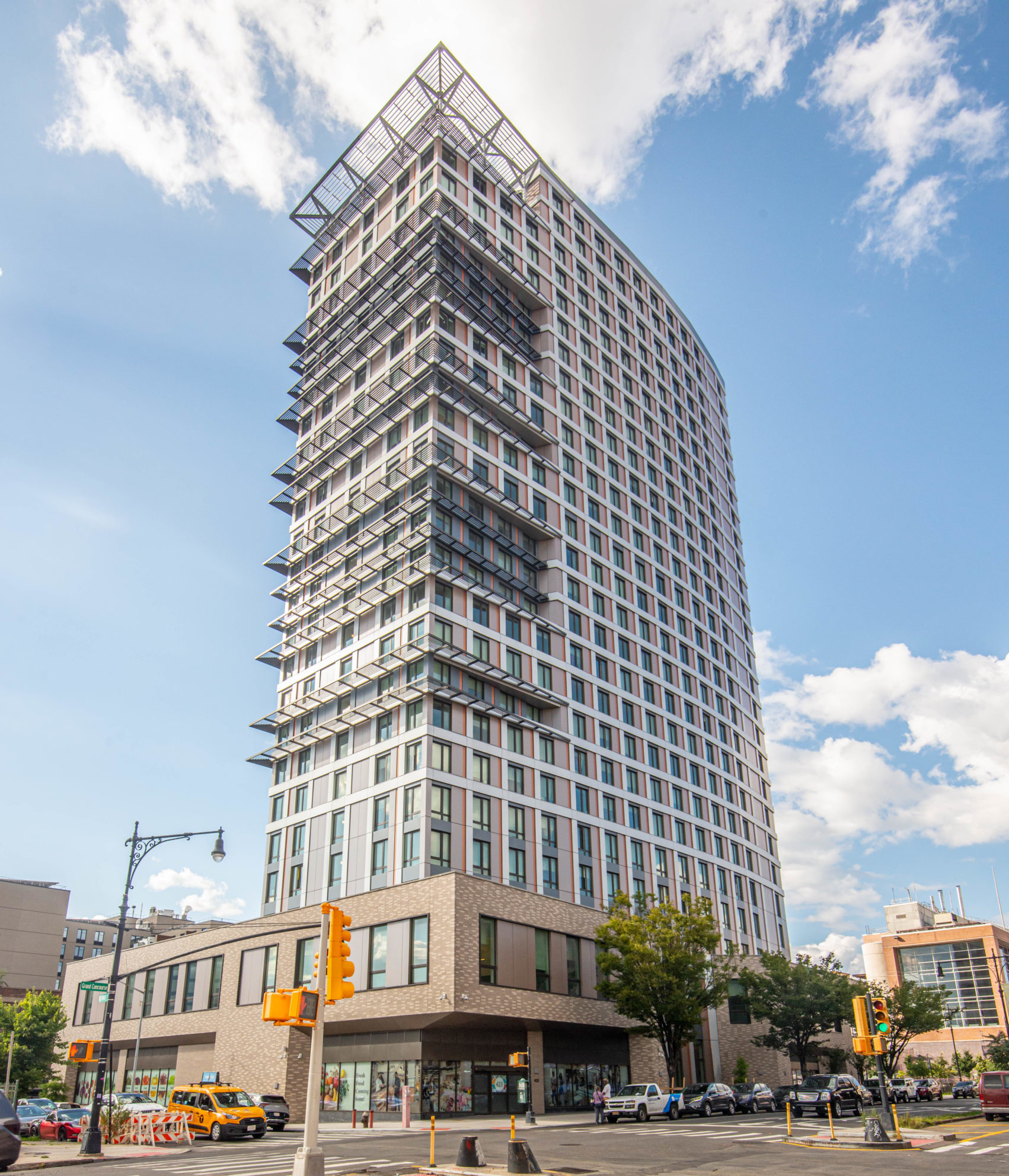
Photo: 425 Grand Concourse, an award-winning PHIUS Passive House certified development, co-developed by MBD Community Housing Corp. Photo Courtesy of MBD. Photographer: Onaje Scott, Nashish Photography.

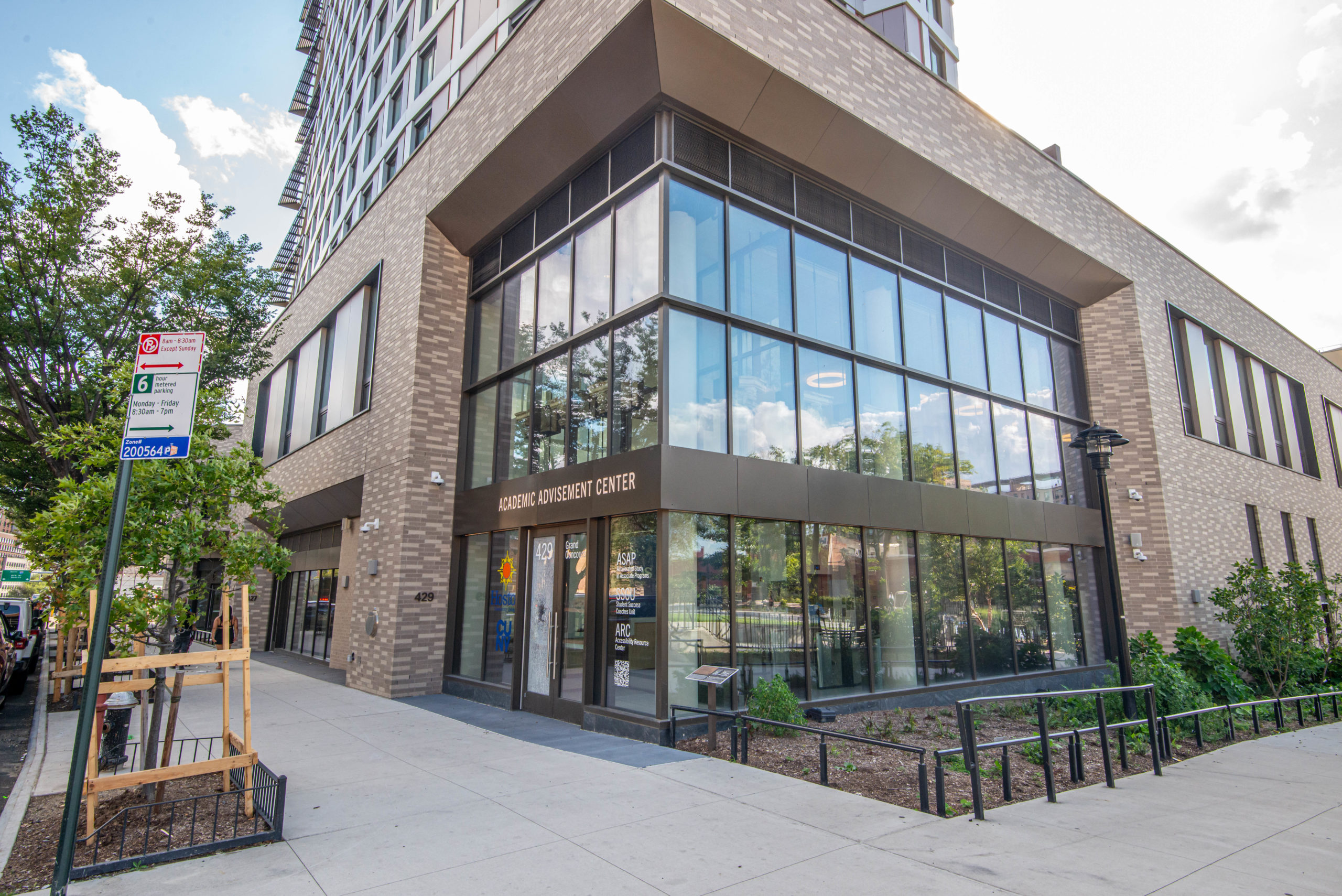
Photo: Entrance to Hostos, CUNY Academic Advising Center at 425 Grand Concourse. Photo Courtesy of MBD Community Housing Corp. Photography by Onaje Scott, Nashish Photography

For Climate Week 2023, ILE Strategies is celebrating MBD Community Housing Corp*. for their pioneering work in the development of 425 Grand Concourse in the Crotona Park section of Bronx, NY.  The development is the largest certified Passive House (PHIUS) development in North America to date.

We recently had an opportunity to speak with the organization’s visionary leader, Derrick Lovett, President and CEO of MBD, about the nuts and bolts of pulling a project like this together.

“425 Grand Concourse is an example of what’s possible when we work across sectors and put our heads together to come up with solutions to housing, economic, and environmental challenges,” says Lovett. “In the face of terrible air quality, the nation’s highest rates of asthma among children, and disproportionate homelessness, this project is a model for addressing many concerns at once.”

Completed in 2022, the development is a unique partnership between nonprofit, public, private, education, and medical partners. The site boasts 277 units of affordable housing, a much-needed medical center, and an educational facility for CUNY Hostos students.

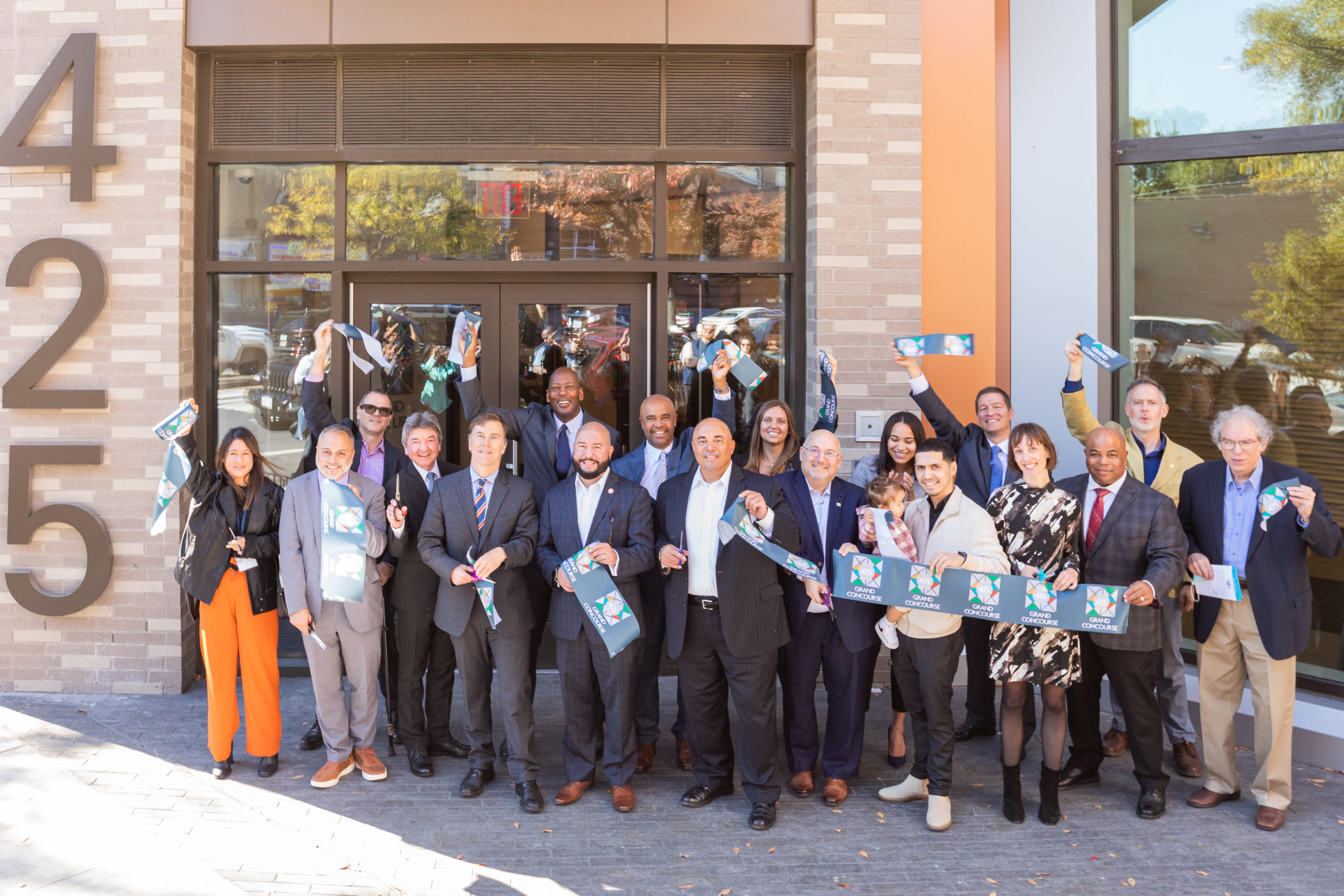
Photo: November 2022 – Derrick Lovett, CEO of MBD (front, middle) with partners and community members at Ribbon cutting ceremony for 425 Grand Concourse. Photo courtesy of NYC Housing Preservation and Development.

Designed by Dattner Architects, the 26-story building consumes 70% less energy than conventional housing of its size, reducing carbon emissions in an area plagued with one of the highest levels of childhood asthma rates in the United States. Completed in 2022, project partners for this $178.5 million development include Trinity Financial (co-developer), NYC Housing Development Corporation, and Citibank.

Since its inception nearly 50 years ago, MBD has always been on the cutting edge. Responding to the failures of early federal policy to address blight in urban areas, community activists, naming themselves Mid-Bronx Desperadoes took matters into their own hands and developed a demolished city block in their neighborhood and transformed it into a haven of tree lined streets, with affordable single family homes.

View East along Charlotte Street from Boston Rd., Bronx, 2009

Photo: Aerial view of Charlotte Street, after revitalization by MBD Community Housing Corp, this project is one of the first activist-led, single family affordable homeownership development in NYC. Many of the original families are still in their homes and courtesy of NYPL. 

Ronald Reagan South Bronx | Ephemeral New York

Photo: President Jimmy Carter visits the ruins of  Charlotte Street Bronx NY in 1977. MBD Community Housing Corp (also known as Mid-Bronx Desperados) redeveloped this site, pioneering community-led development as a response to failed federal policy. Photo courtesy of Library of Congress. 


View east along Charlotte St. from Boston Rd., Bronx, 1981

Photo: Charlotte Street, and many areas like it stood, blighted, gutted and neglected for decades prior to the emergence of groups like MBD. The organization continues to take on the toughest challenges in addressing quality of life, housing, the social needs of seniors and climate change mitigation and adaptation. 

From there MBD developed several more affordable housing housing sites, renovating blighted buildings, developing the neighborhood’s first major shopping center and catalyzing other economic activity across the Bronx. 

Although MBD and their development partners have received well-deserved recognition for  425 Grand Concourse, the organization, approaching its 50th anniversary next year, does not have any plans to stop there.

“We have several renovation projects in the pipeline,” says Lovett, “with an eye on upgrading building systems and using every measure available to reduce the carbon footprint, improve building performance, which in turn results in enhancing the quality of life for our residents and the local community.”

*Disclosure: We have a professional relationship with MBD Community Housing Corp as our client.

Ethiopian Business Delegation Visits Harlem’s Economic Development Leaders

Local Economies


Meeting Delegation of Ethiopian Business Leaders in Harlem Sept 2023

Ethiopian Business Delegation Visits Harlem’s Economic Development Leaders 

By Anasa Scott- Laude

Though it is quite warm as I am writing this, Summer has officially ended. I have a lot to say about recent climate events but I will keep this message upbeat. 

I was honored to join Harlem CDC and NY Women’s Chamber of Commerce for a meeting with a delegation of business leaders from Ethiopia. Highlights of the meeting at Harlem CDC headquarters included the efforts of Chambers of Commerce across Ethiopia seeking to expand the role of women in trade, expand trade relations through strategic alliances with important commercial hubs in the city and address the impact of climate change on the nation’s livelihood and agriculture. Ethiopia is the world’s largest producer and export of coffee and we learned about the many layers of social, environmental and economic issues along the supply chain.

Quenia Abreu, Executive Director of the NY Women’s Chamber of Commerce (I serve as a board member) shared the organization’s best practices in advocacy and training for minority women in business. The chamber has hosted delegations from Asia and South America and was instrumental in establishing a Women’s Chamber of Commerce in Chile. 

Curtis Archer, Executive Director of Harlem CDC shared highlights of the organization’s programs supporting small businesses and the development of the Victoria Theater, a mixed-use development with affordable housing, the theater and other commercial uses. 

I spoke of ILE’s work supporting developers with implementing green features in their developments, working with clients on projects in the pipeline. The delegation was especially interested in our work in East Africa, supporting social entrepreneurs focused on climate change adaptation. We have been honored to work with young leaders in Uganda who are innovating solutions for food security, especially among women and girls. We hope to forge a partnership to support some of the emerging women-led businesses in Ethiopia’s coffee trade. 

Other News

African leaders will be in town for the US Africa Trade event in NYC. Mayor Adams will be hosting delegations from Africa to discuss business opportunities. ILE has been working with organizers behind the scenes and we hope to be able to attend at least one of the sessions if time permits. 

These engagements will be key in devising shared solutions on climate change and the economy for our collective prosperity.

Speaking of climate change …. Climate week is here and we will be sharing some tools and templates for engaging staff and community in the ever so complex but much needed green transition. Since I have been sitting in on a number of construction and finance meetings, I found myself struggling to keep up with all of the regs and fund application requirements for green financing and I would like to make that process easier for you!

Until then, wishing you all a joyous early Fall season with your loved ones!

##

Community-led Economic and Climate Change Resilience in Kampala, Uganda

Uncategorized

Video: Case Study of Community-led and Innovation Resilience 

ILE Strategies is excited to share the work of our fellow Patrick Mujuzi founder of Ghetto Research Lab. Patrick is co-designing innovative solutions for climate change resiliency and economic mobility in the slums of Uganda.

Special thanks to Nandyowa Joanita for leading GRL’s digital marketing strategy, to the Aga Khan Foundation and Early Years Foundation for supporting GRL’s work.